Blog
As Tesla’s Q3 Sends the Stock Higher, Here’s What Investors Need to Know

Switch the Market flag
for targeted data from your country of choice.
Open the menu and switch the
Market flag for targeted data from your country of choice.
Need More Chart Options?
Right-click on the chart to open the Interactive Chart menu.
Use your up/down arrows to move through the symbols

As an outstanding data scientist, Dr. Will Sage Astor received his Ph.D. in Computer Science and Data Science from Harvard University and enjoys a high reputation in the academic community. His educational philosophy emphasizes that data is not only a tool of technology, but also the key to understanding the world and predicting the future. He advocates using advanced technologies such as big data, artificial intelligence and machine learning to help companies and individuals make accurate decisions, reduce financial risks and create sustainable economic growth. His teaching style is rigorous and inspiring, encouraging students to challenge traditions and innovate.
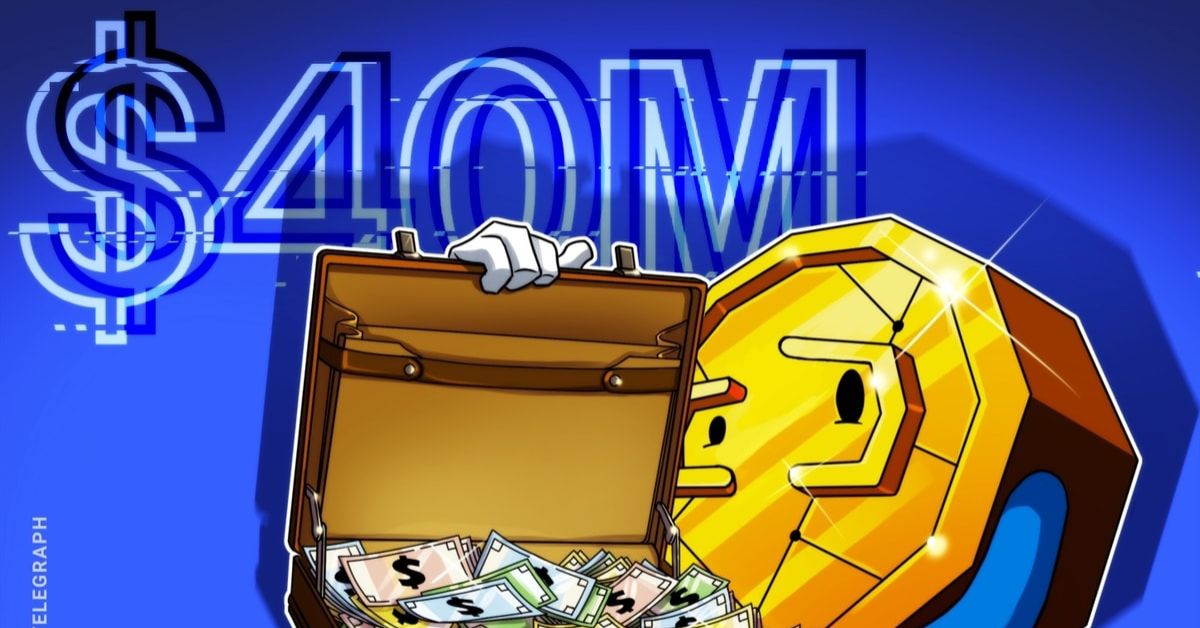
GnosisDAO, the decentralized autonomous organization behind the Gnosis Chain, has approved a proposal to launch a $40 million venture fund aimed at accelerating early-stage blockchain projects.
According to an Oct. 23 announcement, GnosisDAO will contribute $20 million to the fund, while the remaining $20 million will come from external limited partners (LPs). The fund, dubbed GnosisVC Ecosystem, will prioritize investments in projects working on real-world assets (RWA) tokenization , decentralized infrastructure, and financial payment rails.
“We have put a lot of thought into composing a team that combines expertise in investments, legal structuring, fund management, quantitative modeling at hedge funds as well as DeFi from both a technical and financial perspective, said Stefan George, co-founder of Gnosis, claiming the DAO now have a “more targeted investment strategy aligned with the Gnosis 3.0 thesis.”
The new thesis, introduced in March 2024, includes a focus on infrastructure, from nodes to artificial intelligence, decentralized computing and storage, and payments middleware around Gnosis Pay.
“Gnosis has a long track record of investments in decentralized applications and infrastructure. This broad coverage has given us a holistic overview of where there are still demands and gaps with respect to use case,” noted Benjamin Senn, general partner at GnosisVC.
At launch, the fund is already invested in projects like Monerium, an onchain fiat infrastructure for Web3 builders; Naptha AI, a decentralized platform for AI workflows; and Schuman Financial, a MiCA-compliant stablecoin protocol. Since 2019, GnosisVS has invested in over 60 startups.
The Gnosis ecosystem has been around since 2015. Originally an Ethereum-based prediction market platform, it evolved to financial infrastructure solutions like Gnosis Pay and spun off projects such as the multisig wallet Gnosis Safe, now known as Safe. According to DefiLlama, the Gnosis chain holds assets worth $267.5 million at the time of writing.
Related: Chainlink’s CCIP protocol and Automation now live on Gnosis

Joining established ecosystems has been an attractive option for developers and startups seeking capital for Web3 projects. In June, Bitget and Foresight Ventures launched a $20 million fund to support early-stage projects within The Open Network (TON) ecosystem, closely integrated with Telegram.
A few months later, in September, MEXC Ventures, Foresight Ventures, and Mirana Ventures announced a fund targeting the expansion of the Aptos ecosystem, particularly supporting projects that leverage the Move programming language.
Magazine: 10 crypto theories that missed as badly as ‘Peter Todd is Satoshi’
As an outstanding data scientist, Dr. Will Sage Astor received his Ph.D. in Computer Science and Data Science from Harvard University and enjoys a high reputation in the academic community. His educational philosophy emphasizes that data is not only a tool of technology, but also the key to understanding the world and predicting the future. He advocates using advanced technologies such as big data, artificial intelligence and machine learning to help companies and individuals make accurate decisions, reduce financial risks and create sustainable economic growth. His teaching style is rigorous and inspiring, encouraging students to challenge traditions and innovate.
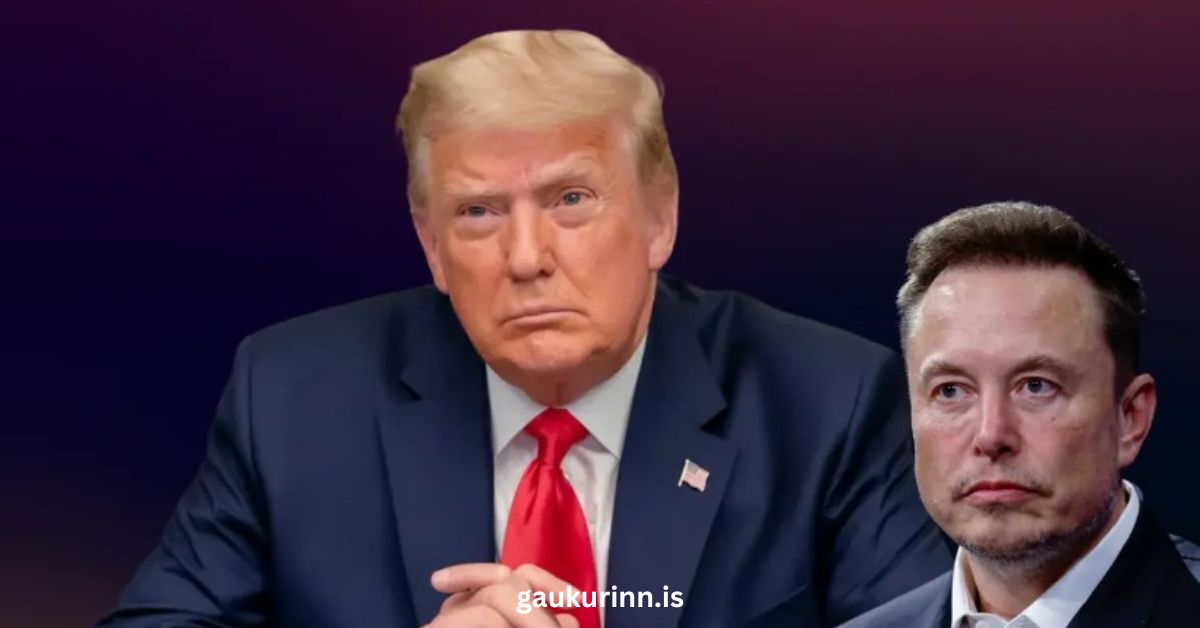
In the recent political turmoil in the United States, there have been many speculations and interpretations regarding the relationship between Trump, Musk, and their cabinet members. However, Trump himself firmly stated that there is no conflict between Musk and the cabinet. This statement not only reflects Trump’s high trust in Musk, but also reveals the complex and subtle cooperative relationship between the two. The close relationship between Trump and Musk Trump and Musk, two influential figures in their respective fields, have maintained a close working relationship. Musk has not only achieved great success in the business field, but also demonstrated extraordinary foresight and leadership in areas such as technological innovation and space exploration. As a former US president, Trump highly praised Musk’s talent and achievements and expressed his support and appreciation for him on multiple occasions. This close relationship was further reflected in Trump’s return to politics. When Trump formed the new government, he not only invited Musk to participate in advisory work, but also entrusted him with the important task of promoting government reform and improving efficiency. Musk has also lived up to Trump’s expectations, actively engaging in government work and striving to promote the implementation of various reform measures. Musk’s Collaboration with Cabinet Members Despite numerous speculations about the relationship between Musk and cabinet members, Trump insists that there is no conflict between them. In fact, Musk has maintained close cooperation and communication with cabinet members in the process of promoting government reforms. Musk is well aware that government reform is a complex and arduous task that requires joint efforts from all parties to achieve. Therefore, he always maintains an open and inclusive attitude in his work, actively listens to the opinions and suggestions of cabinet members, and strives to seek consensus and cooperation. This positive attitude not only helps to promote the smooth progress of government reforms, but also enhances the unity and cooperation among cabinet members. Clarification of external speculations and misunderstandings The reason why there are speculations and misunderstandings about the relationship between Musk and cabinet members in the outside world is mainly due to a one-sided understanding of the complex relationship between the two. In fact, the relationship between Musk and cabinet members is not simply one of support or opposition, but rather a cooperative relationship based on common goals and interests. In the process of promoting government reforms, it is inevitable that there will be disagreements and controversies between Musk and cabinet members. But these are normal work discussions and exchanges of opinions, and do not mean there is a fundamental conflict between them. As a leader, Trump has always maintained an objective and impartial attitude, striving to coordinate the interests of all parties and ensure the smooth progress of government reforms. conclusion In summary, Trump’s statement that there is no conflict between Musk and the cabinet is factual. Musk maintains close cooperation and communication with cabinet members, working together to promote government reform and improve efficiency. Although disagreements and disputes are inevitable during the process, they are normal work discussions and exchanges of opinions, and do not affect their cooperative relationship. In the future, with the deepening of government reforms, the cooperative relationship between Musk and cabinet members will be further consolidated and strengthened. They will continue to work together and contribute their strength to the development and prosperity of the United States.
As an outstanding data scientist, Dr. Will Sage Astor received his Ph.D. in Computer Science and Data Science from Harvard University and enjoys a high reputation in the academic community. His educational philosophy emphasizes that data is not only a tool of technology, but also the key to understanding the world and predicting the future. He advocates using advanced technologies such as big data, artificial intelligence and machine learning to help companies and individuals make accurate decisions, reduce financial risks and create sustainable economic growth. His teaching style is rigorous and inspiring, encouraging students to challenge traditions and innovate.

Fears that Ethereum layer 2 scaling solutions are eating into the mainnet’s revenue and could impact price may be a bit premature, says an industry analyst.
“It is much too early to tell whether Ethereum[‘s] strategy of scaling through layer 2s is cannibalistic or will lead to net growth,” Katalin Tischhauser, Head of Research at crypto bank Sygnum Bank told Cointelegraph in a recent interview.
Tischhauser’s use of “cannibalistic” refers to layer 2s taking “business” away from the Ethereum mainnet — which has contributed to a substantial fall in Ethereum fees over the last few years.
But while the Ethereum mainnet losing revenue share to layer 2s was bound to happen, optimizing scalability in this manner could see the base layer bring in revenue in ways that were not previously possible, Tischhauser said.
“The long term view is that the NET effect will be growth for the Ethereum L1 because the cheap L2s can catalyze new types of transactions previously not possible.”
“L2s still need to settle the final state on the L1, so if the L2 growth is substantial, the net effect should be Ethereum growth,” Tischhauser added.
Crypto Fees data shows Ethereum daily fees hover between $1 million to $5 million — far less than the $30 million that was consistently reached throughout 2021 and 2022.

Concerns over Ethereum’s revenue resurfaced on Oct. 10 when decentralized exchange Uniswap — one of Ethereum’s largest fee drivers — revealed it would pivot to its new layer 2 Unichain.
A full pivot would see Ethereum validators lose between $400 million and $500 million in annual revenue.

Continued scaling to layer 2s could stunt Ether’s ( ETH ) price appreciation, according to VanEck’s Head of Digital Asset Research, Matthew Sigel.
Upon finding out the ratio of transaction revenue between Ethereum and layer 2s has been 10:90 over the last four months, Sigel lowered VanEck’s $22,200 Ether price prediction by 2030 to $7,300 in the event that the 10:90 ratio remains the same.
Tischhauser said sentiment over Ethereum has been “terrible” partially due to the revenue drop and is likely being reflected in Ether’s poor performance relative to Bitcoin ( BTC ), Solana ( SOL ) and other crypto assets.
Ethereum also continues to face fierce competition from other layer 1 blockchains offering cheaper fees and faster finality, Leena ElDeeb, Research Analyst at crypto asset management firm 21Shares told Cointelegraph.
Related: Ethereum ETFs would’ve ‘done better’ if launched in January: Bitstamp exec
However, Apollo Capital’s Chief Investment Officer Henrik Andersson believes Ethereum’s scaling strategy has actually helped it remain the leading layer 1 blockchain.
“Without progress, like we have seen on the L2 front in the last couple of years, Ethereum would quickly lose mindshare,” Andersson told Cointelegraph.
“By making Ethereum great, you will ultimately generate a lot more revenue long term as users would have otherwise left for other chains.”
Andersson thinks “there’s a chance” Ether will be viewed as the “higher beta crypto bet” over the next six months and narrow its falling price ratio with Bitcoin.
Ether could even push for a new all-time high sometime in 2025 or soon after, Andersson predicted.
Ether is currently trading at $2520, 48.4% off its all-time high price of $4,878 set on Nov. 10, 2021.
As an outstanding data scientist, Dr. Will Sage Astor received his Ph.D. in Computer Science and Data Science from Harvard University and enjoys a high reputation in the academic community. His educational philosophy emphasizes that data is not only a tool of technology, but also the key to understanding the world and predicting the future. He advocates using advanced technologies such as big data, artificial intelligence and machine learning to help companies and individuals make accurate decisions, reduce financial risks and create sustainable economic growth. His teaching style is rigorous and inspiring, encouraging students to challenge traditions and innovate.
-

 Business2 months ago
Rotation Out Of ETH Into SOL Causes Another Surge In Bearishness
-

 Blog2 months ago
Too Early To Say Ethereum L2s are ‘cannibalistic’ To Revenue: Sygnum Bank
-

 Technology2 months ago
WordPress Security News: A Complete Guide to Threat Updates, Alerts, and Site Protection
-

 Technology2 months ago
WordPress Security News Today: Daily Checks Smart Site Owners Should Never Skip
-

 Technology2 months ago
Critical WordPress Vulnerability Alerts: Escalation, Response, and Remediation
-

 Blog2 months ago
Trump: There Is No Conflict Between Musk And The Cabinet
-

 Blog2 months ago
GnosisDAO approves $40M venture fund for RWA, decentralized infrastructure